In general terms, a dermal filler refers to a substance used to add volume or support to the skin. In medical and aesthetic practice, the term is commonly understood as a material designed for soft tissue augmentation, helping improve facial contours and skin appearance.
Botulinum toxin injections work by temporarily relaxing the muscles responsible for wrinkle formation. In contrast, hyaluronic acid (HA) fillers focus on restoring lost volume by filling targeted areas of the skin, improving thickness and smoothness to create a more youthful appearance.
In aesthetic treatments, dermal fillers are generally classified into calcium- or collagen-based fillers, PMMA (polymethyl methacrylate) fillers, and hyaluronic acid fillers, which use a naturally occurring polysaccharide found in the skin.

Dermal fillers are mainly injection-type viscoelastic gels and are widely used for cosmetic and cosmetic purposes such as wrinkle improvement, fine lip improvement, and skin scar treatment. There used to be collagen as a material for dermal fillers, but now HA fillers using hyaluronic acid are the most popular and used.
In particular, improvement in stability thanks to the use of hyaluronic acid, a component in the human body, is a driving force for rapid growth in the wrinkle improvement market, despite the fact that fillers are generally more expensive than botulinum toxin.
Hyaluronic acid fillers have a shorter duration than medium and long-term fillers, but over time after the procedure, the injected fillers are naturally decomposed and absorbed and discharged from the body, making it safer. It has the advantage of being easy to remove and re-treatment by using an injection that dissolves the filler.
In reality, products in the filler market are not exactly the same. The difference in viscosity or elasticity depends on the type of filler.
Because the usage varies from part to part, the actual price is formed above the marginal cost.
Korean Dermail Filler 1: The Chaeum from Hugel

The Chaeum is a biocompatible polymer that cross-reacts hyaluronic acid, which has high safety, to produce a gel with constant viscoelasticity.
The Chaeum Premium, which contains lidocaine, significantly relieves the patient’s pain. In addition, it is increasing user satisfaction by launching customized filler products for various purposes such as wrinkle management and facial contouring.
The Chaeum Style, launched in September 2018, is the latest product from the The Chaeum brand that dramatically improves the feel of injection while maintaining the inherent volume and pain relief effects of Hugel filler.
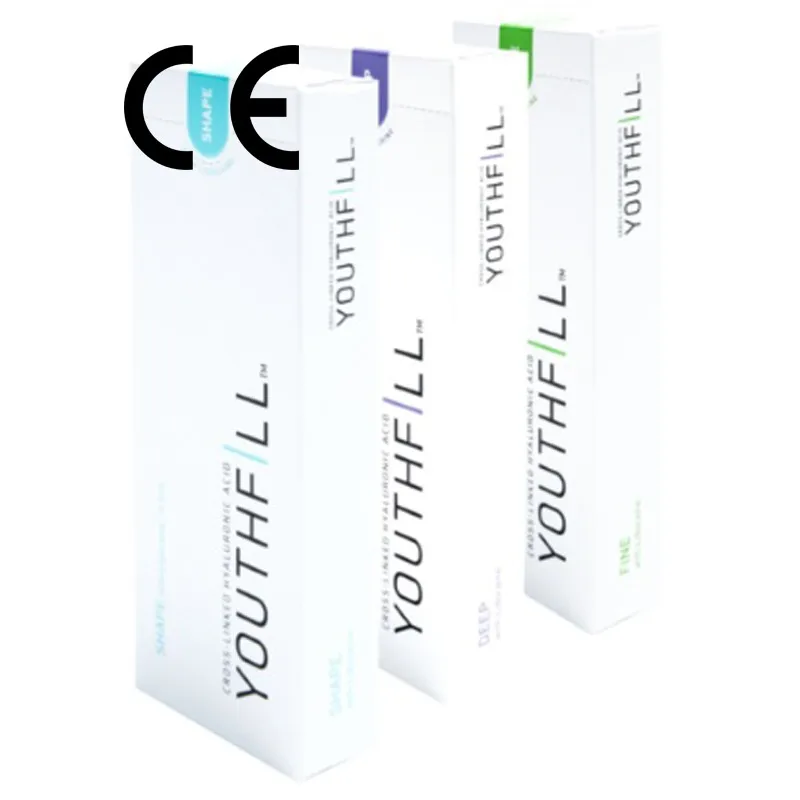
Korean Dermail Filler 2: Youthfill

Hyaluronic acid filler ‘Youthfill’ uses high-quality HA certified by the European Medicines Quality Commission (EDQM). In addition, to ensure stability, endotoxin is controlled at less than 0.04 IU/mg. ‘Youth Fill’ includes Youthfill Fine, Youthfill Deep and Youthfill Shape.
All three products have a hyaluronic acid concentration of 24 mg/cc, and the viscoelasticity is controlled by differentiating the degree of cross-linking.
Korean Dermail Filler 3: Neuramis from Meditox

Neuramis has a total of 5 lines from Neuramis Light Lidocaine to Neuramis Volume Lidocaine for temporary improvement of facial wrinkles, and 4 of them contain lidocaine to reduce pain during surgery. Although Neuramis is a Korean product, it uses raw materials registered in the US FDA and European Medicines Quality Committee, which are famous for being strict around the world.