Juvelook has earned a well-deserved reputation as one of the most effective skin booster treatments to come out of Korea in recent years. The results — improved texture, smaller pores, firmer skin, and a lasting collagen-boosted glow — have made it enormously popular across Asia and increasingly worldwide. But before you book your first session, there’s one conversation that deserves more honesty than it usually gets: the side effects.
This post covers everything you need to know about Juvelook side effects — from the mild reactions that are completely normal after any injection, to the moderate issues worth monitoring, to the rare but serious complications that every patient should be aware of before treatment. It also covers Juvelook Volume side effects, Juvelook under eye side effects, and what the current clinical picture says about Juvelook side effects long-term.
The goal isn’t to frighten you — it’s to inform you. An informed patient makes better decisions, asks better questions, and gets better outcomes.
Is Juvelook Safe? The Short Answer
Yes — Juvelook is considered safe when administered by a qualified, experienced medical professional. Its two active ingredients, cross-linked hyaluronic acid (HA) and poly-D,L-lactic acid (PDLLA) microspheres, are both biocompatible materials with long, established records of use in aesthetic and medical procedures. Juvelook has received approval from both the US FDA and the Korean KFDA, and the product’s round-shaped PDLLA microparticles are specifically engineered to minimise the risk of nodule formation that affected older collagen stimulators.
That said, safe when properly administered is not the same as risk-free. Like any injectable treatment, Juvelook carries a spectrum of possible side effects — ranging from trivial and temporary to rare and serious. Understanding what falls into each category is exactly what this guide is for.

Common Juvelook Side Effects: What to Expect
These are the side effects that most patients experience to some degree. They are expected, manageable, and typically resolve within a few days without any intervention.
Redness
Mild redness at and around the injection sites is the most common post-treatment reaction. It reflects the skin’s normal response to puncture and product delivery. In most cases, redness fades within a few hours to 24 hours after treatment. Patients with sensitive or reactive skin may notice it lasting slightly longer — up to 2–3 days — but significant persistent redness beyond this point should be mentioned to your practitioner.
Swelling
Swelling is particularly common in areas where the skin is thin and porous — most notably the under-eye area, but also along the cheekbones and forehead. Most patients experience mild puffiness for 24–48 hours after their Juvelook session. In the under-eye area specifically, swelling can occasionally be more pronounced and may take up to 5–7 days to fully settle. This is not abnormal and doesn’t indicate something has gone wrong — it simply reflects the sensitivity of that anatomical zone.
Bruising
Small bruises at injection sites are common with any injectable treatment. They occur when the needle or cannula disturbs a small blood vessel during insertion. Bruising typically resolves within 5–10 days. If you’re planning Juvelook ahead of a social event, allowing at least 10–14 days between treatment and the occasion is a sensible buffer.
Small Bumps or Papules
Many patients notice small, firm bumps at injection sites immediately after treatment. These are caused by the product sitting in the superficial dermis and are a completely normal, expected finding. They typically resolve within 24–48 hours as the product integrates into the surrounding tissue. Practitioners sometimes recommend gentle massage of the area in the days after treatment to help smooth distribution — always follow your specific injector’s aftercare instructions.
Tenderness at Injection Sites
The treated area may feel tender or sensitive to touch for 2–4 days after a Juvelook session. This is normal inflammation and is part of the healing process that ultimately drives the collagen-stimulating effect. Avoid pressing or rubbing the treated area during this period.
Moderate Juvelook Side Effects: When to Pay Attention
These side effects are less common than the above but are worth knowing about — and worth reporting to your practitioner if they occur or persist beyond the expected window.
Prolonged or Excessive Swelling
While some swelling is expected, swelling that is severe, asymmetrical, or doesn’t begin improving after 5–7 days should prompt a follow-up with your injector. Prolonged swelling can occasionally signal an inflammatory response or — rarely — an early infection. Don’t wait and hope; get it checked.
Skin Discolouration
Some patients notice temporary hyperpigmentation or faint discolouration at injection sites, particularly those with darker skin tones or a history of post-inflammatory hyperpigmentation. This usually resolves over several weeks and can be minimised by diligent sun protection in the weeks following treatment.
Delayed-Onset Swelling
A small number of patients experience a second wave of mild swelling 1–3 weeks after treatment, distinct from the immediate post-procedure reaction. This is thought to be related to the PDLLA particles beginning their biostimulatory activity — the body’s fibroblast response being triggered. It’s not dangerous, but it can be unexpected if patients aren’t warned in advance.
Nodules
Nodules — small, palpable lumps under the skin — are one of the more discussed concerns with PDLLA-based injectables. Juvelook’s spherical, porous microparticle design is specifically intended to reduce this risk compared to earlier collagen stimulators like Sculptra. However, nodule formation can still occur if the product is incorrectly diluted, injected too superficially, or unevenly distributed.
Clinics that administer Juvelook frequently tend to have better outcomes in this regard, because they maintain a steady stock of properly pre-hydrated product and have injectors well-practiced in technique. A key insight from Korean practitioners: Juvelook requires a minimum 24-hour hydration period before use. Clinics that skip or shorten this step — typically those using the product infrequently — are more likely to see particle clumping and subsequent nodule risk.
Small nodules often resolve on their own over weeks to months. Persistent nodules can typically be treated with hyaluronidase (to address the HA component) or other management strategies — so they are rarely permanent. Always raise any persistent lump with your practitioner promptly.

Juvelook Under Eye Side Effects: Special Considerations
The under-eye area is one of the most popular — and most delicate — zones for Juvelook treatment. Its thin skin, proximity to important blood vessels, and sensitivity to product migration mean that Juvelook under eye side effects deserve their own section.
In the under-eye zone specifically, patients should be prepared for:
- More pronounced swelling than in other facial areas, which can last up to 5–7 days
- Bruising that may be more visible due to the translucency of under-eye skin
- Temporary puffiness that can make the area look slightly worse before it looks better — a period some practitioners describe as the “treatment dip” before collagen rebuilding begins
- Tyndall effect risk (a bluish discolouration visible through thin skin) if product is placed too superficially — a technique error rather than a product flaw, but one worth being aware of
Published clinical case data has shown that when Juvelook is administered in the under-eye area using a cannula by an experienced practitioner, the side effect and complication rate is low and outcomes are generally satisfactory. The use of a cannula — rather than a sharp needle — reduces the risk of vessel trauma in this sensitive zone.
Choosing a practitioner with specific experience in under-eye Juvelook injection is particularly important for this area. Not all injectors who are competent in full-face treatment have the same level of comfort and skill with periorbital work.
Juvelook Volume Side Effects: Is the Risk Profile Different?
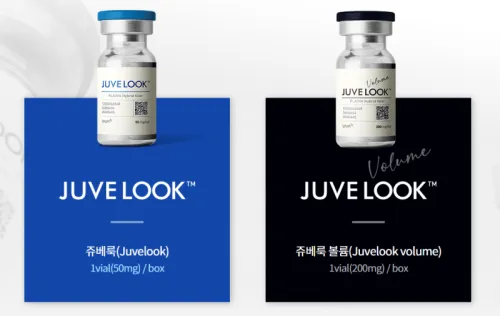
Juvelook Volume uses the same active ingredients as standard Juvelook but with a higher concentration of cross-linked HA and larger PDLLA particles. It’s designed for deeper injection into the subcutaneous layer rather than the mid-dermis, targeting areas with more significant volume loss.
Because it’s a thicker, more concentrated product injected at a deeper level, Juvelook Volume’s side effect profile differs in a few ways:
- Higher swelling potential: Deeper injection and higher HA concentration mean post-treatment swelling is often more noticeable with Juvelook Volume than with standard Juvelook.
- Longer settling time: Product integration can take longer — some patients notice minor asymmetry or firmness that resolves over 2–4 weeks as the product settles.
- Slightly higher vascular risk: Some practitioners consider Juvelook Volume’s thicker consistency to carry marginally higher vascular occlusion risk than the more diluted standard formulation. This underscores the importance of deep-layer injection expertise for Volume treatments.
- Nodule risk: The larger PDLLA particles in Juvelook Volume mean that injection depth accuracy is even more critical. Product placed in the wrong tissue layer — particularly if it ends up in the fat compartment rather than the target subcutaneous layer — can produce firm areas or result in limited effectiveness.
Rare but Serious Juvelook Side Effects
These complications are uncommon, but they are real, and patients deserve to understand them before consenting to treatment.
Vascular Occlusion
Vascular occlusion — where injected product blocks or compresses a blood vessel — is the most serious risk associated with any facial injectable, including Juvelook. If the product enters or occludes a vessel, it can interrupt blood supply to surrounding tissue, potentially causing skin necrosis (tissue death) or, in the most severe cases involving vessels connected to the eyes, vision impairment or blindness.
This risk is not unique to Juvelook — it applies to all facial injectables, including standard HA fillers. However, because PDLLA-based products are not reversible with hyaluronidase (which only dissolves the HA component), managing a PDLLA-related occlusion is more complex. The risk is directly related to injector skill, knowledge of facial anatomy, and the use of appropriate technique — particularly the use of cannulas rather than sharp needles in high-risk vascular zones.
Immediate warning signs of vascular occlusion include sudden skin whitening, severe unexpected pain, blanching, mottled skin colour, or any sudden changes in vision following injection. These are emergencies. If you experience any of these after a Juvelook session, seek immediate medical attention.
Granuloma Formation
In rare cases, an excessive fibroblast or immune response to the PDLLA particles can produce a foreign body granuloma — a persistent, sometimes hard lump under the skin. Unlike temporary nodules, granulomas can be more difficult to treat and may persist for months. This complication is more likely in individuals with certain immune conditions and with incorrect injection technique.
Infection
Any injectable procedure carries a small risk of infection at the treatment site. Symptoms include increasing redness, warmth, swelling, and pain that worsens rather than improves in the days after treatment. Infection risk is significantly reduced by proper sterile technique and should be essentially negligible in a properly run medical clinic. Any signs of infection require prompt medical assessment and antibiotic treatment.
Nerve Damage
Sensory or motor nerve damage can theoretically occur if a needle or cannula contacts a nerve during injection. In most cases, any nerve-related effects — such as temporary numbness or altered sensation — resolve within weeks to months. Permanent nerve damage from aesthetic injectables is extremely rare when performed by experienced practitioners with good anatomical knowledge.
Juvelook Side Effects Long-Term: What Does the Current Evidence Say?
One of the most frequently asked questions is about Juvelook side effects long-term — particularly given that PDLLA is a biostimulator that works over months rather than days. The good news is that PDLLA is fully biodegradable: it is broken down by the body through normal metabolic pathways and eventually excreted, leaving behind no permanent residue. The collagen it stimulates is your own body’s collagen, not a foreign substance.
Long-term safety studies on PDLLA-based injectables show a reassuring profile. The material has been used in dissolvable medical sutures and implants for decades, giving it an extensive safety record beyond its cosmetic applications. There is no current clinical evidence of harmful long-term systemic effects from Juvelook when properly administered.
The most meaningful long-term risk remains the delayed-onset nodule or granuloma — which, while uncommon, can emerge weeks or months after injection if particle distribution was uneven. This is why follow-up appointments and open communication with your practitioner throughout the treatment course are important.
For a deeper look at the most serious safety concern associated with Juvelook specifically — vascular occlusion and its implications — this post covers it comprehensively and candidly: Juvelook Blindness: 7 Critical Truths You Must Know Before Any Injection.
The Wikipedia entry on biodegradable polymers used in medicine offers useful neutral scientific background on how PDLLA and similar materials behave in the human body over time.
Who Should Avoid Juvelook?
Juvelook is not suitable for everyone. You should not receive Juvelook if you:
- Are pregnant or breastfeeding
- Have an active skin infection, inflammation, or herpes outbreak in the treatment area
- Have a known allergy to any component of the formula
- Have an autoimmune condition or are immunocompromised
- Are taking blood-thinning medications (aspirin, ibuprofen, warfarin) without medical supervision — discuss with your GP before stopping any prescribed medication
- Have had recent laser resurfacing, chemical peels, or other ablative treatments in the target area — a waiting period of several weeks is typically recommended
Always provide your full medical history and medication list at your consultation. Your practitioner cannot make safe decisions without accurate information.
How to Minimise Juvelook Side Effects: Before and After Tips
Before Treatment
- Avoid aspirin, ibuprofen, fish oil, vitamin E, and alcohol for at least 1 week before your session — all of these increase bruising risk
- Avoid retinol, AHA, and BHA products for several days before treatment to reduce skin sensitivity
- Stay well hydrated in the days leading up to your appointment
- Don’t schedule treatment too close to an important event — allow at least 10–14 days for any bruising or swelling to resolve
After Treatment
- Avoid strenuous exercise, saunas, steam rooms, and excessive heat exposure for at least 48 hours — heat can accelerate product diffusion and worsen swelling
- Avoid alcohol for 24–48 hours post-treatment
- Sleep with your head slightly elevated on the first night to reduce swelling
- Apply a clean ice pack gently to the area if needed — 15 minutes on, 15 minutes off
- Avoid pressing, rubbing, or massaging the treated area unless specifically instructed to do so by your practitioner
- Wear a high-SPF sunscreen daily — especially in the weeks after treatment as the skin is more photosensitive
- Avoid other facial injectables (Botox, fillers), HIFU, or RF treatments for at least 4 weeks — ideally longer for RF devices
Choosing the Right Injector: The Single Biggest Factor in Your Safety
It bears repeating: the majority of serious Juvelook complications are linked to injector error — not the product itself. Incorrect injection depth, suboptimal dilution, poor anatomical knowledge, and inadequate patient assessment are the root causes of most significant adverse events.
When choosing a practitioner for Juvelook, look for:
- A board-certified dermatologist, plastic surgeon, or aesthetic physician — not an unqualified technician
- Documented, specific experience with Juvelook (not just general filler experience)
- A clinic that uses authentic, properly sourced Juvelook product
- A practitioner who takes time for a thorough consultation, discusses your medical history, and explains the risks clearly before you consent
- Access to emergency protocols and hyaluronidase on-site (for HA reversal in case of occlusion)
If you’re weighing Juvelook against other skin booster options and want to understand how its overall profile — including safety — compares, Rejuran vs Juvelook: The Honest Comparison You’ve Been Looking For covers the key differences clearly. And if you want to understand what the full treatment process involves before deciding, Juvelook Price: The Complete Guide to What You’ll Actually Pay in 2025 is useful context on what a proper, well-administered treatment course looks like and costs.
The Bottom Line on Juvelook Side Effects
Juvelook is a well-designed, clinically approved treatment with a strong safety record when administered correctly. The vast majority of patients experience only mild, temporary side effects — redness, swelling, and small injection-site bumps that resolve within a few days. Serious complications are rare, and most are directly related to practitioner skill and technique rather than the product itself.
That said, this is an injectable treatment. It enters the skin with a needle. It has a spectrum of risks that every patient deserves to understand clearly before consenting. Going into treatment informed — knowing what’s normal, what to watch for, and when to seek help — puts you in the strongest possible position for a safe experience and a satisfying outcome.
If you’re ready to take the next step, you can explore both Juvelook and Juvelook Volume to understand what each formulation offers — and use that knowledge to have a more productive, confident conversation with your chosen practitioner.
Disclaimer: This post is for informational purposes only and does not constitute medical advice. Always consult a qualified medical professional before undergoing any injectable treatment. If you experience any unexpected or severe symptoms after a Juvelook session, seek medical attention promptly.