If you’ve started exploring Korean skin booster treatments, you’ve almost certainly come across these two names: Rejuran and Juvelook. Both are injectable skin treatments developed in South Korea. Both promise healthier, younger-looking, more radiant skin. And both are wildly popular — not just in Korea, but across Asia and increasingly around the world.
But they are not the same thing, and choosing between them without understanding how they actually work could mean spending money on a treatment that isn’t the best fit for your skin. That’s what this guide is here to fix.
Whether you’ve been searching for a juvelook vs rejuran skin booster comparison, reading through juvelook vs rejuran Reddit threads, or simply trying to make sense of conflicting clinic advice, this post will give you a clear, practical breakdown of everything you need to know — from ingredients and mechanisms to real-world results and who each treatment actually suits best.
What Is Rejuran? A Quick Overview
Rejuran — often called “salmon injection” or “baby skin injection” in Korean aesthetic circles — is an injectable skin treatment made from polynucleotides (PN), which are DNA fragments derived from salmon. It was developed by South Korean biopharmaceutical company PharmaResearch and has been a cornerstone of Korean dermatology for years.
The key mechanism: when injected into the dermis, the PN molecules get to work repairing damaged skin cells, reducing inflammation, strengthening the skin barrier, and stimulating fibroblast activity. Rejuran essentially helps your skin heal itself — it restores the internal environment of the skin rather than adding any external structure or volume.
Think of it as a deep skin reset. It doesn’t dramatically change the way you look; it makes your skin function better, feel softer, and respond more healthily to everything from sun exposure to aging.
Key benefits of Rejuran:
- Repairs damaged and sensitized skin
- Strengthens the skin barrier
- Reduces inflammation and redness
- Improves skin hydration and elasticity
- Softens fine lines and improves overall skin tone
- Excellent for post-laser recovery and acne-damaged skin

What Is Juvelook? A Quick Overview
Juvelook is a newer injectable, also from Korea, and it takes a fundamentally different approach. Rather than using polynucleotides, Juvelook combines two active ingredients: cross-linked hyaluronic acid (HA) and poly-D,L-lactic acid (PDLLA) microspheres. This makes it a hybrid product — part hydrator, part collagen biostimulator.
When Juvelook is injected, the HA delivers immediate hydration and subtle plumping. The PDLLA microspheres then slowly dissolve over time, triggering the skin’s fibroblasts to produce new collagen. This means results build progressively — you’re not just filling a space, you’re rebuilding your skin’s structural foundation from the inside out.
If you want a deeper understanding of where Juvelook fits in the landscape of fillers and skin boosters, the article Is Juvelook a Filler? Here’s What You Actually Need to Know breaks it down clearly.
Key benefits of Juvelook:
- Stimulates collagen production over months
- Improves skin firmness and elasticity
- Reduces pore size and smooths skin texture
- Helps with depressed acne scars
- Provides mild volumizing and subtle lifting effect
- Long-lasting results (up to 12–18 months)
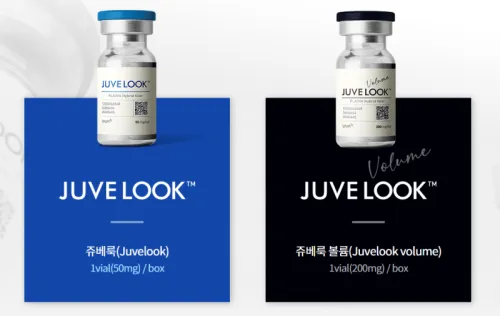
There are also two versions: the original Juvelook, which focuses on skin quality and texture, and Juvelook Volume, which has a higher HA concentration for more noticeable lifting and volumizing. You can explore both at Juvelook and Juvelook Volume.
Rejuran vs Juvelook: Key Differences at a Glance
Before we go deeper, here’s a side-by-side snapshot to orient you in this rejuran vs juvelook debate:
| Rejuran | Juvelook | |
|---|---|---|
| Main ingredient | Polynucleotides (PN) from salmon DNA | PDLLA microspheres + cross-linked HA |
| Primary action | Skin repair and regeneration | Collagen stimulation + hydration |
| Results timeline | 2–4 weeks for initial improvements | 2–4 months for full collagen effects |
| Duration | ~6 months; maintenance every 6 months | 12–18 months |
| Best for | Damaged, sensitive, or healing skin | Firmness, pores, texture, early sagging |
| Volumizing effect | None | Mild to moderate (Juvelook Volume: more) |
| Downtime | Minimal (1–2 days) | Minimal (1–2 days) |
Ingredients: What Makes Each Treatment Tick
The Science Behind Rejuran
Rejuran’s active ingredient is polynucleotide (PN), a long-chain biopolymer derived from highly purified salmon DNA. When injected into human skin, PN molecules integrate with the extracellular matrix and begin promoting cellular regeneration. They reduce oxidative stress, calm inflammatory pathways, and support fibroblast proliferation — meaning your skin’s own repair mechanisms are switched on.
Importantly, Rejuran is not adding any foreign structural material to your skin. It’s more like giving your skin a biological tune-up. This is why it’s particularly well-suited for sensitive, reactive, or compromised skin — the kind that’s been damaged by excessive sun exposure, harsh treatments, or the general wear and tear of aging.
The Science Behind Juvelook
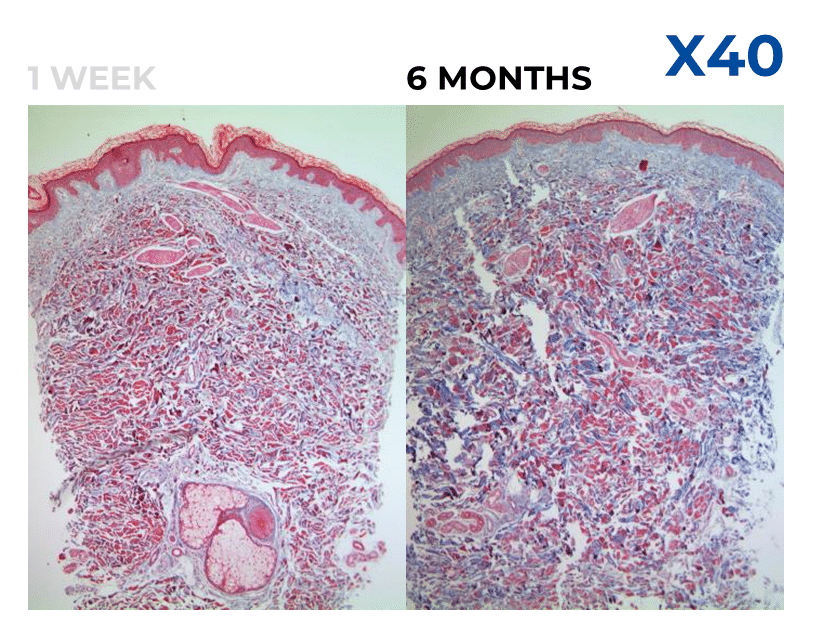
Juvelook’s formula is more complex. The PDLLA microspheres are tiny, spherical particles made from a biodegradable synthetic polymer. Once injected, they create what scientists describe as “controlled micro-injury” — the body perceives the particles and activates its healing response, which includes the production of new collagen fibers. As the PDLLA gradually biodegrades over months, the newly formed collagen replaces it, leaving behind a stronger, firmer skin structure.
The cross-linked HA in Juvelook plays a supporting role: providing immediate moisture and subtle volume while the PDLLA gets to work. The two ingredients work in tandem — short-term glow plus long-term structural improvement. For a comprehensive look at how Juvelook is administered and what to expect from the process, this guide is excellent: Juvelook Injection: The Complete Expert Guide to Technique, Results, and Safety.
Results: What You’ll Actually Notice After Each Treatment
After Rejuran
Most people notice changes within the first few weeks. The skin starts to feel more hydrated and calm — less reactive, more balanced. Over the following weeks, fine lines begin to soften, skin tone becomes more even, and there’s a quiet, healthy radiance that wasn’t there before. It’s not a dramatic transformation; it’s the kind of improvement that makes people ask what you’ve been doing differently.
Rejuran is popular in Korea for its ability to give that “baby skin” texture — smooth, plump, and almost poreless-looking without any puffiness or artificial volume. Many K-pop artists and celebrities are known fans of the treatment for this exact reason.
After Juvelook
Juvelook’s result timeline is longer and more gradual. In the first week or two, you’ll notice the hydration boost from the HA — skin looks dewy and refreshed. Then, as the PDLLA works its collagen-stimulating magic over the following months, the improvements deepen: pores appear smaller, skin feels firmer, fine lines diminish, and shallow acne scars start to fill in.
By months two to four, the full effect is usually visible. This is when most patients see the most significant change — a genuine improvement in skin density and structure, not just surface glow. And because those results are built on real collagen rather than a product that simply occupies space, they tend to last considerably longer.
For a detailed look at how Juvelook performs in real-world conditions, this in-depth piece explores the evidence: Juvelook Filler: 7 Powerful Truths That Reveal Whether It’s the Future of Natural Beauty.
Juvelook vs Rejuran Reddit: What Real Users Are Saying
The juvelook vs rejuran Reddit conversation is surprisingly nuanced. On subreddits focused on Korean beauty and aesthetic treatments, you’ll find users generally agreeing on a few key points:
- Rejuran is the go-to for damaged or sensitive skin. Users who’ve had laser treatments, significant acne scarring, or reactive skin consistently report excellent results with Rejuran as a skin health baseline before pursuing more intensive treatments.
- Juvelook is favored for structural improvement. People in their 30s and 40s dealing with pores, early sagging, or loss of skin density tend to prefer Juvelook for its collagen-building capacity.
- The “Rejuvelook” combination is increasingly popular. Many users report their clinics in Seoul or Singapore recommend both treatments together — Rejuran for skin health and Juvelook for structural improvement — as a layered protocol that delivers more comprehensive results than either alone.
- Patience is essential with Juvelook. First-time Juvelook users often note that they expected faster results and had to wait 6–8 weeks before noticing the structural changes. Those who stuck with the recommended treatment schedule were consistently more satisfied.
The overall juvelook vs rejuran reviews picture across forums suggests that dissatisfaction usually comes from misaligned expectations — particularly with Juvelook, where the timeline is longer — rather than from the treatments not working.
Who Should Choose Rejuran?
Rejuran is the better choice if your primary concern is skin health and repair. It’s especially well-suited for:
- 🌿 Sensitive or reactive skin that doesn’t tolerate aggressive treatments well
- 🌿 Post-laser or post-procedure recovery — Rejuran accelerates healing beautifully
- 🌿 Acne-prone or acne-scarred skin where inflammation and barrier damage are the root issue
- 🌿 Younger patients in their 20s looking for skin quality maintenance rather than structural correction
- 🌿 Anyone wanting subtle, natural-looking improvements without any volumizing effect
- 🌿 Those who want faster visible results — Rejuran’s effects tend to appear earlier
Who Should Choose Juvelook?
Juvelook is the stronger option when your concern is structural — when you want your skin not just to look better, but to actually become firmer and denser over time. It’s ideal for:
- ✨ Patients in their mid-30s and above experiencing real collagen loss and early skin laxity
- ✨ Enlarged pores that aren’t responding to topical treatments
- ✨ Depressed acne scars where collagen rebuilding is needed
- ✨ Skin that looks thin or crepey and has lost density
- ✨ Those wanting longer-lasting results and are willing to wait for the full effect
- ✨ People looking for subtle lifting without committing to traditional fillers
If you’re also considering where to get Juvelook done, this guide is a great resource: Juvelook Under Eye: The Complete Guide to Safe Treatment, Results, and Real Expectations.
Can You Use Rejuran and Juvelook Together?
Yes — and many aesthetic practitioners in Korea now recommend combining them. The protocol is sometimes called “Rejuvelook” in clinic circles, and the logic is simple: Rejuran restores and repairs the skin’s internal environment, while Juvelook builds new structural collagen on top of that healthier foundation. Together, they address skin quality and skin density simultaneously.
The combination works particularly well if you have both skin damage concerns (sensitivity, inflammation, poor barrier function) AND structural concerns (pores, early laxity, thin skin). Your practitioner will typically space the treatments appropriately and may adjust volumes or session timing based on your skin condition.
As with any injectable combination, the most important factor is having an experienced injector who knows both products well. Poor technique — incorrect injection depth, wrong dilution, or unsuitable patient selection — can lead to unwanted outcomes. For a frank discussion of what to know before any Juvelook injection, including the small but real risks, this article is required reading: Juvelook Blindness: 7 Critical Truths You Must Know Before Any Injection.
For a broader scientific context on how polynucleotide-based injectables like Rejuran are classified and studied, the Wikipedia article on polynucleotides offers a useful neutral reference.
Side Effects: What to Expect from Each Treatment
Rejuran Side Effects
Rejuran is considered one of the gentler injectables. Common and expected side effects include:
- Small bumps or papules at injection sites (resolve within 1–3 days)
- Mild redness and tenderness
- Occasional bruising
Because PN is derived from salmon DNA, there is a theoretical risk of allergic reaction in people with severe fish allergies, though this is rare in practice. Always disclose allergies to your practitioner before treatment.
Juvelook Side Effects
Juvelook has a similarly low side effect profile for most patients:
- Swelling and small bumps at injection sites (resolve within 24–48 hours)
- Mild bruising
- Redness and sensitivity in the treated area
- Rare: small nodules if injection technique or product placement is suboptimal
The rounded shape of Juvelook’s PDLLA microspheres is specifically designed to minimize the nodule risk that plagued older collagen stimulators like Sculptra — but choosing an experienced injector remains critical.
Cost Comparison: Rejuran vs Juvelook
Pricing varies significantly depending on location, clinic, and the volume used per session. In Korea, both treatments are widely available at competitive prices compared to Western markets. As a rough general guide:
- Rejuran: Typically more affordable per session; often sold in packages of 3–4 sessions
- Juvelook: Generally slightly higher per session due to the PDLLA component; but because results last longer, the cost-per-month may actually work out similar or less
When factoring in maintenance frequency — Rejuran typically needs repeat sessions every 6 months, while Juvelook may only need a top-up every 12–18 months — Juvelook can represent better long-term value for those seeking collagen support.
Rejuran vs Juvelook: The Final Verdict
Both Rejuran and Juvelook are outstanding treatments. Neither is universally “better” — they are designed for different purposes, and the right choice depends almost entirely on what your skin actually needs.
Choose Rejuran if: Your skin is sensitive, damaged, inflamed, or post-procedure. You want a skin reset, barrier repair, and healthy glow without any structural change or long wait.
Choose Juvelook if: Your skin is losing firmness and density, you have pores or shallow scars you’d like to improve, and you’re willing to wait 2–3 months for results that last significantly longer.
Consider both if: You want comprehensive skin renewal — repair and regeneration from Rejuran, structural rebuilding from Juvelook — and you have the budget and patience for a layered protocol.
Whatever you decide, the most important step is finding a practitioner who has real, hands-on experience with both products and can guide you toward the right choice — and the right technique — for your individual skin.
Ready to Take the Next Step?
If you’re leaning toward Juvelook after reading this comparison, you can explore both formulations here: Juvelook and Juvelook Volume. Going into your clinic consultation already informed about what each product does — and what it doesn’t do — will help you have a much more productive conversation with your practitioner and set realistic expectations for your results.
Korean aesthetic medicine is advancing fast. Whether you go with Rejuran, Juvelook, or a combination of both, you’re choosing from genuinely world-class treatments that put skin health at the centre of everything.